Showing posts with label japan. Show all posts

Sunday, January 7, 2018

Hatsumode(one's first visit of the year to a shrine)

Happy New Year!

I visited the neiborhood shrine on New Year’s Day.

Hatsumode is a person’s first visit to a temple or a shrine.

When you visit to a temple or a shrine, be mindful of the differences in prayer manners at shrines and temples.

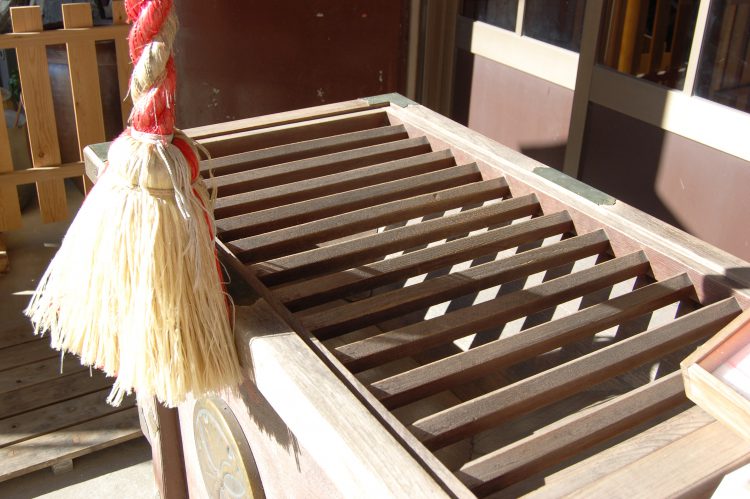
The ritual is the same at first; washing the left hand, then the right hand with water, ringing the bell and putting a donation in the box.

But at shrines, you're supposed to bow twice, clap twice, pray, then bow.

At the temples to pray with your palms together.

The reason why the practices are different stems from the different origins and purposes of shrines and temples.

Temples are the residences of monks who teach Buddihism, which came to Japan from India via China.

Shrines are the residences of “kami,” or gods, worshipped in indigenous Japanese Shinto faith.

All shrines have a “torii,” or a gate, at the entrance to separate human territory from the realm of the kami.

Thursday, October 26, 2017

Ebisu

恵比寿様のイラスト

Japan’s tradituinal faith honors seven deities of good fortune.

Ebisu is one, and he brings prosperity to merchants’shops, and statues of him always feature a smiling face with narrowed eyes.

There is the place called Ebisu in Tokyo.

The name of this area comes from Yebisu, a brand of beer Sapporo Breweries produced in a local factory.

The melody of Yebisu beer’s  commercial song is used to indicate a train departure at Ebisu station.


The honor the name, Ebisu Shrine was established there by transferring parts of the deity’s spirit from Nishinomiya Shrine in Hyogo Prefecture.

Ebisu is enshrined at about 3,500 shrines nationwide.

The home shrine is Nishinomiya.

Commerce has flourished throughout the ages in Kansai, so people honor Ebisu.

Kansai people call him  affectionately “Ebessan”.

Friday, October 6, 2017

A trick to sitting straight

You have to sit straight a Japanese traditional room.

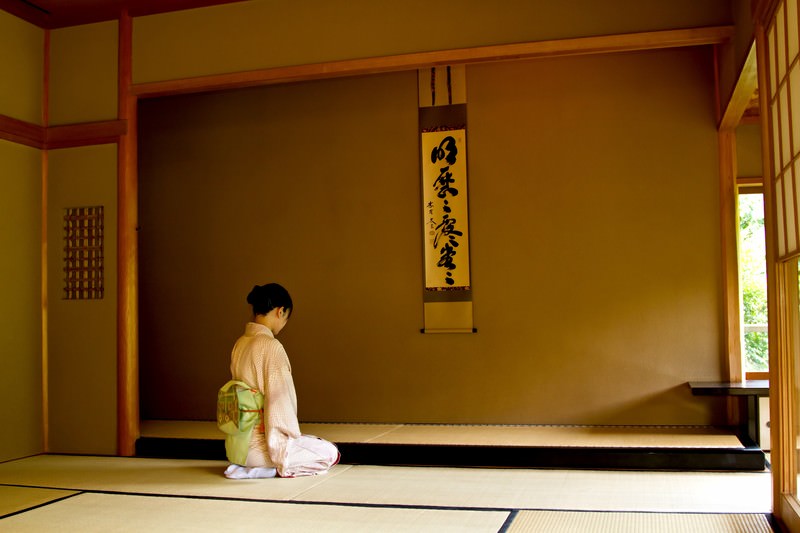
Seiza (sitting straight) is to sit in the correct manner on a Japanese tatami mat.

You’ll think that it is tough to keep sitting on your heels with your legs folded.

People who are not used to Seiza have a foot numb.

There is a trick to sitting straight. You can reduce the weight on your legs, and the numbless, if you cross your big toes slightly and sit between the open ankles instead.

Seiza has long been one of the basics of Japanese arts, including martial arts.

They say holding the posture tones your abdominal and back muscles, while slow breathing and relaxed shoulders promote peace of mind.

The position is also called “kashikomaru”, often used in the past tense to mean “certainly, sit or ma’am”.

It comes from the practice of sitting straight as an expression of humility in Buddhist and Shinto ceremonies.

Thursday, September 14, 2017

Many Japanese think the Noh play is difficult.


能 に対する画像結果

There is the Noh theater in Ginza.

You can watch Noh performance easily.


However, many Japanese think the Noh play is difficult.

And there are many Japanese who have never viewed the Noh.

I have watched the performance but once.


Nohgaku is on the UNESCO list of intangible cultural heritage assets.

It was included in 2008.

Nohgaku dates back to the Nara period in the 8th century.

The term includes both Noh, a uniquely Japanese style of musical theater, and Kyogen, a comedic style that began around the same time.


Nohgaku plays use over 200 masks.

The mask of Hannya, whose face became distorted like a demon’s due to extreme jealousy.

Noh is often performed in conjection with Kyogen.

They say the comic relief of Kyogen, coupled with the subtle profundity of Noh, soothes the mind.


The tempo of Noh is very slow for modern people.

I felt sleepy during the performance.

At the same time, we notice ourself living in the world time passing  fast.


Es gibt das Noh-Theater in Ginza.
Sie können Noh Leistung leicht beobachten.
Allerdings denken viele Japaner, dass das Noh-Spiel schwierig ist.
Und es gibt viele Japaner, die noch nie die Noh gesehen haben.
Ich habe die Aufführung aber einmal gesehen.
Nohgaku ist auf der UNESCO-Liste der immateriellen Vermögenswerte des kulturellen Erbes.
Es wurde 2008 aufgenommen.
Nohgaku stammt aus der Nara-Periode im 8. Jahrhundert.
Der Begriff umfasst sowohl Noh, ein einzigartig japanischen Stil des Musiktheaters, und Kyogen, ein komödiantischer Stil, der um die gleiche Zeit begann.
Nohgaku spielt über 200 Masken.
Die Maske von Hannya, die Gesicht wurde wie ein Dämon wegen der extremen Eifersucht verzerrt.
Noh wird oft in Übereinstimmung mit Kyogen durchgeführt.
Sie sagen das komische Relief von Kyogen, gepaart mit der subtilen Tiefe von Noh, beruhigt den Geist.
Das Tempo von Noh ist für moderne Menschen sehr langsam.
Ich fühlte mich während der Vorstellung schläfrig.
Gleichzeitig bemerken wir uns, wie wir in der Weltzeit leben.

Wednesday, May 17, 2017

Every Lapanese girls have Licca-chan dolls.

I have two daughters.

They love playing with Licca-chan dolls.

Licca-chan doll is a dress-up doll.

Japanese girls have loved it for 50 years.

I and my mother had Licca-chan dolls when we are little girls.

Some old Licca-chan dolls are made a deal at a high price.


Licca-chan has a detailed biography.

She was born on May 3 to aFrench father, an orchestra conductor, and a Japanese mother, a designer.

Her full name is Licca Kayama.

She is supposed to be an 11-year old elementary school.


However, for the G-8 Summit in Okinawa in 2000, a special edition Summit Licca-chan was given to all attendees as a gift from Japan.

That doll was supposed to be in her 30s and pursuing a career as a diplomat.

So, Licca-chan is forever 11, and an adult.

Wednesday, May 10, 2017

Sansai, mountain plant is one of spring feature in Japan.


edible-wild-plants-972998_640

Japanese people eat “sansai” in spring.

Sansai  is  mountain vegetables, edible wild plant.

I like deep-fried “hukinoto”, or butterbur sprouts.

It has some bitterness, but I understand the bitterness has a medicinal effect.

In the spring, many people suffer from sleeplessness,  irritation and other conditinons.

Seasonal “sansai ”, or mountain vegetables, supposedly help adress such problems.

A lot of people swear by seasonal foods.

Certainly, they are fresh and highly nutritious.

You can buy and eat sansai at local grocery stores and Japanese restaurants.

Some Japanese people pickes at mountain oneself, but some mountain vegetables can be toxic.

So, an amateur is in danger.


Japaner essen "Sansai" im Frühling.

Sansai ist Berg Gemüse, essbare Wildpflanze.

Ich mag frittierte "Hukinoto", oder Pestwurz Sprossen.

Es hat einige Bitterkeit, aber ich verstehe, dass die Bitterkeit eine heilende Wirkung hat.

Viele Menschen leiden im Frühling Schlaflosigkeit, Gereiztheit und andere Conditinons.

Saisonale "sansai" oder Berg Gemüse, angeblich helfen Adresse solche Probleme.

Viele Menschen schwören auf saisonale Lebensmittel.

Sicherlich, sie sind frisch und sehr nahrhaft.

Sie können kaufen und essen in lokalen Lebensmittelgeschäften und japanische Restaurants.

Einige Japaner pickes am Berg selbst, aber einige Berg Gemüse können giftig sein.

Ein Amateur ist in Gefahr.

Tuesday, March 14, 2017

I love Takoyaki-Osaka’s popular local specialities

PAK86_takoyakidekiageari15122810_TP_V

“Takoyaki” (Octpus dumplings) is  one of Osaka’s local popular local specialities.

It is a baked ball of wheat flour of three to five centimeter diameter, into which a small piece of octpus is put.

Not only eating at a stand and a restaurant, but also cooking at home.

I have a takoyaki pan and they say every house int the city owns one.

4041b83d2e70ad349c6aeaed3dd06742-750x499

By most account, takoyaki was created in 1935, when an Osaka restaurant cooked a batter made from flour and stock in the shape of ball, with diced octpus inside.

I sometimes eat rice with takoyaki as the main dish.

osaka-997318_640

Many foreighners surprised that, because that would be like eating rice with bread as entree.

I enjoy takoyaki with variatinons.

I use sausage, rice cake and cheese, shrimp instead of octpus.

Not only that, I cook spanish “ajilio” -dish fried in garlic oil with a takoyaki pan.

I think takoyaki has very possible food.

Thursday, March 2, 2017

blowfish

d0007

Japanese like eating “fugu”, or blowfish, but foreighners surprised at eating poisonous fish.

In the old days, eating  blowfish, was often deadly.

Japan’s Edo government frequently banned consumption of the poisonous fish to prevent unnecessary militaly losses.

Today, blowfish preparation is strictly regulated, so it is safe to eat it in restaurants with licensed processing specialists.


I hear that Osaka accounts for about 60% of the blowfish consumed in Japan.

Most people call the fish fugu, but in Osaka they use the term “teppou”, meaning gun, because it can kill –at least when it is prepared incorrectly.

“Fugu nabe”, or blowfish stew , is called “tecchiri” In Osaka.

It is a shortened form of “chiri nabe”, a simple hot pot, with “teppou”.

Blowfish has a very light flavor.

It tastes great raw, as sashimi, or deep-fried.

Monday, February 6, 2017

Japanese moms struggles with sewing for April.

Hello! I am Ramen Mom.

Since my daughter will soon enter the kindergarten,

I am now making bags for a kid to use in kindergarten.

It is very difficult because I am not good at sewing.

Bags for children must be handmade by mothers in her kindergarten, and ready-maded items.

Some mothers ask their mothers, some buy what they sell as handmade.

Many mothers get handmade bags at  only handling handmade items applications.

When I was a student, I had a home economics lesson.

I have never been sewing since then.

I bought a cloth in December and cut the cloth in January.

I have not sewed yet.

I will do my best to be in time for the entrance in April.


Da meine Tochter bald in den Kindergarten eintreten wird,
Ich mache jetzt Taschen für ein Kind im Kindergarten zu verwenden.
Es ist sehr schwierig, weil ich nicht gut am Nähen bin.
Taschen für Kinder müssen von Müttern in ihrem Kindergarten handgefertigt werden, und fertig-maded Elemente.
Einige Mütter fragen ihre Mütter, einige kaufen, was sie als handgefertigt verkaufen.
Viele Mütter bekommen handgefertigte Taschen nur Handhabung handgefertigte Gegenstände Anwendungen.
Als ich ein Student war, hatte ich eine Hauswirtschaft Lektion.
Seitdem habe ich nie genäht.
Ich kaufte ein Tuch im Dezember und schnitt das Tuch im Januar.
Ich habe noch nicht genäht.
Ich werde mein Bestes tun, um rechtzeitig für den Eintritt im April zu sein.

Thursday, February 2, 2017

“Kiritanpo”is Japanese winter food loves by foreign people

Japanese loves “Nabe” in winter.

Nabe is Japanese steamboat dishes and cooked at the table.

I love  and often eat Nabe .

Nabe is good for housewife, because it is easy to prepare.

I just cut  ingreadients, for example vagetables , meat and fish.

People can get many kinds of soup in the supermarket.

I stocks several kinds of soup bag in winter, so I can eat Nabe anytime I want.


きりたんぽ鍋のイラスト


Kiritanpo Nabe is Japanese local food.

It is considered a traditional food of Akita Prefecture, in northern Japan.

Kiritanpo is rice on a stick.

Newly harvested rice is cooked, kneaded, skewered and shapede, then toasted over a charcoal fire.

“Kiri” means cut in Japanese, while “tanpo”refers to a “tanpo-yari”, a training spear tipped with a leather or cloth sheath filled with cotton.


In nabe, cooked rice and noodles are usually added to the broth at the very end (we call it “shime”),

once the other ingredients have been cooked. But kiritanpo goes in at the biginning, with the chicken, vegetabeles and everything else.

They say kiritanpo began as a portable meal carried by mountain hunters, though there are other theories as well.

Thursday, September 15, 2016

Japanese bathing manner


Many tourists and expats make mistakes at Japanese pubric bath or hot springs .

They often bath with underwear.

People take a bath in bare.

You have to “kakeyu” before  bathing, too.

It is the practice of putting hot water in a pail and pouring it over your body  before bathing.

Because many people use the same bath, it is important to cleanse yourself before you get in.

The kakeyu ritual also helps acclimate your body to the very hot water.

Remember not to put your towel in the bath water, because that is considerd unclean.


Japanese pubric bath is very hot.

That is a legacy of Edo period.

It was sonsidered essential for counstruction workers, who come from all over Japan to build the new capital, to stay fit for hard labor by sweating in a hot bath every day.

They say the water was hot enough to amaze a Duych physician who visited Japan near the end of the era.


Viele Touristen und tapsen ex-machen Fehler am japanischen pubric Bad oder heiße Frühlinge.

Sie häufig Bad mit der Unterkleidung.

Leute nehmen ein bloßes Bad an.

Sie haben zu "kakeyu" vor dem Baden auch.

Es ist die Praxis, heißes Wasser in einem Eimer zu stellen und es über Ihren Körper vor dem Baden zu gießen.

Weil viele Menschen dasselbe Bad verwenden, ist es wichtig, sich zu reinigen, bevor Sie hineingelangen.

Das kakeyu Ritual hilft auch, sich Ihr Körper zum sehr heißen Wasser zu akklimatisieren.

Merken Sie sich, Ihr Handtuch im Badewasser nicht zu stellen, weil das unrein considerd ist.


Japanisches pubric Bad ist sehr heiß.

Das ist ein Vermächtnis der Periode von Edo.

Es war sonsidered Hauptsache für counstruction Arbeiter, die von überall in Japan kommen, um das neue Kapital zu bauen, passend für die harte Arbeit zu bleiben, indem sie in einem heißen Bad jeden Tag schwitzen.

Sie sagen, dass das Wasser heiß genug war, um einen Arzt von Duych in Erstaunen zu setzen, der Japan in der Nähe vom Ende des Zeitalters besucht hat.

Thursday, August 4, 2016

Awa Odori–Japanse traditional dance in Tokushima


Awa Odori was originally danced in Tokushima,

on the island of Shikoku, over 400 years ago.

The season peaks with the dance in the city of Tokushima,

which starts on 12. Aug.


You can see this dance in Tokyo.

I visit  there every year.

The oldest regular Awa Odori dance outside Tokushima Prefecture is the one

in Koenji, in Tokyo’s Suginami Ward.

It wad first held in 1957 to liven up a shopping street.

The dance is popular nationwide because it is characterized by the jovial and

energetic up-tempo rhythm, allowing each group, or “ren,” to dance in various ways.


The audience chat “odoruahou ni miru ahou onaji aho nara odoranya sonson ! ”

In English, that would be, “ It’s a fool dances and a fool who watches. If both are fools,

you might as well have fun dancing! “ Some Awa dance festivals welcome unofficial participants.

It is not difficult to dance.


Tuesday, August 2, 2016

The future career of Japansese children

success-479572_640

Japanese chirdren goes to  junior high schools after  graduation  from  elementary schools.

High schools  have a usual course and a commercial course, an agricultural course, an industrial course, but

If you have the graduation qualification of the high school,

you can advance to the physical science and the faculty of liberal arts.

In other words , I can choose  the medical department ande become a doctor even if I leave the high school of the commerce department.

In addition, I may find a job in the IT-related company even if I learn literature at a university.


According to the one’s elementary school result, it is decided whether you can go to the university in German.

It is criticized for early decision of childrens’ future.

career-96854_640


In Japan, there are many people to go to the university, but

It is said that many Japanese student is low level.

There are too many students who cannot do a fraction.

There are many student who cannot choose their career, too.

They are  troubled what kind of work he choose in the case of finding employment.


Many young people resigns jobs immediately  even if they can find  jobs.


Japanischer chirdren geht zu Mittelstufen nach der Graduierung von Grundschulen.

Höhere Schulen haben einen üblichen Kurs und einen kommerziellen Kurs, einen landwirtschaftlichen Kurs, einen Industriekurs, aber

Wenn Sie die Graduierungsqualifikation der Höheren Schule haben,

Sie können zur physischen Wissenschaft und der Fakultät von Geisteswissenschaften vorwärts gehen.

Mit anderen Worten kann ich wählen die medizinische Abteilung werden ande ein Arzt, selbst wenn ich die Höhere Schule der Handel-Abteilung verlasse.

Außerdem kann ich einen Job in IHM - verwandte Gesellschaft finden, selbst wenn ich Literatur an einer Universität erfahre.


Gemäß jemandes Grundschule-Ergebnis wird es entschieden, ob Sie zur Universität in Deutsch gehen können.

Es wird für die frühe Entscheidung der Zukunft von Kindern kritisiert.


In Japan gibt es viele Menschen, um zur Universität zu gehen, aber

Es wird gesagt, dass vieler japanischer Student niedrige Stufe ist.

Es gibt zu viele Studenten, die keinen Bruchteil tun können.

Es gibt viele Student, der ihre Karriere auch nicht wählen kann.

Sie werden beunruhigt, welche Arbeit er im Fall von der Entdeckung der Beschäftigung wählt.


Viele junge Menschen geben Jobs sofort auf, selbst wenn sie Jobs finden können.


日本では小学校を卒業すれば中学校に行きます。

高校は普通科や商業科、農業科、工業科などがありますが、

高校の卒業資格を持っていれば

大学は理系でも文系でも進むことができます。

つまり、商業科の高校を出ても医学部に行って医者になることができます。

また、大学で文学を学んでいてもIT関係の会社に就職することもあります。


ドイツでは小学校の成績で

大学に行けるかどうかが決まり、

あまりに早いうちに進路が決まってしまうことが問題となっているそうですが、


日本では、とりあえず大学に行く、という人が多いので、

大学生になっても分数ができない人がいたり、

就職の際に自分にはどんな仕事があっているのかと悩む人や、

就職しても自分には向いていないとしてすぐにやめてしまったりすることが問題に

なっています。
Thursday, July 28, 2016

Japanese love beer garden

beer-375974_640


Japanese love beer garden(drinking  beer outdoors).

Dropping by a beer garden is the best way to spend a hot and humid Japanese summer evening.


Beer gardens are often opened at a rooftop of a department store or a building.

The first rooftop beer garden opened in Osaka in 1953, but it has been ommon to drink beer outside

since 1875.

It was around that time Japan’s first commercially successful brewery, called Spring Valley Brewery, opened.


Beer gardens continue to evolve.

They are now standing beer gardens and ones with seats for solitary drinkers.


Friday, June 3, 2016

How to meet with a Geisha in Kyoto

geisha-949978_640

Geisha is icon of Japan.

If you can meet one, it will definitely be the highlight of your trip.

But how do you meet Geisha?


It is hard to see Maiko or Geiko in Kyoto.

If you see a woman with full-make up and gorgeous kimono in the day,

she must be a tourist in costume.

There are a many places in Kyoto where tourist can pay to be dressd up as a Maiko and walk around Gion as a part of touring experience.


You sometimes see Maiko at Gion area in the evening.

They are offerd to engagement.

You must not force to take photos, call out to , shake hands with because they are going to work.

What you can do is just to see in the street.


If you want to meet maiko, there are some event or restaurant where maiko and geiko entertain the guests.

At the Kaburenjyo theater in Kamishichiken, there is a beer garden that is open to everyone during this sommer(July and August).

You can meet maiko and geiko there.


If you want to know more, this page will help you.

http://us.jnto.go.jp/blog/how-to-meet-with-a-geisha-in-kyoto/


Friday, May 27, 2016

Japanese Tea


This is the season of picking flesh tea.
“Shincya” is sold in May.

Tea leaves are picked several times a year.
“Shincya” is made from the first leaves of spring.
boseong-899610_640
It has less caffeine and catechins (the source of bitterness) than teas made from older leaves harvested in summer and fall.
It also has more amino acids, the source of umami and sweetness.

At some tea farms, passengers can pick flesh tea leaves.
茶摘みのイラスト

Japanese people loves tea.
Japanese tea is beautiful green.
That comese from immediate heat processing of the leaves, which prevents fermentation.

You can get  plastic bottoles of Japanese tea at convenience store.
But it is more elegant to serve tea from “Kyusu”(Japanese tea pot).


Tea ceremony is Japanese traditional culture.
You can enjoy traditionl style of tea ceremony too.

Tuesday, May 24, 2016

The summit and Japanese pearls

bracelet-737103_640

Ise-Shima summit will be held this week.

Ise-Shima, Mie prefecture is famous for pearls.

Pearl pins will be given to the visiting heads of state, and that there is an island in the prefecture named Pearl Island.

The island, which is not far from the summit venue, is a Mie native by the name of Kokichi Mikimoto became a successful pearl farmer.

Mikimoto is a perl brand and has a famous building at Ginza, Tokyo.

Thursday, May 12, 2016

Mamachari–Japanese bicycle

I everyday take “mamachari”, a kinds of bicycle.
It is very usefle to carry children.
“Mamachari”  is different from regular bicycles in several ways.

Tuesday, April 12, 2016

Randoseru and the New school term


The new school term begins in April in Japan.
My children goes to school.

入学式のイラスト「女の子と家族」
An entrance ceremony is held on April.
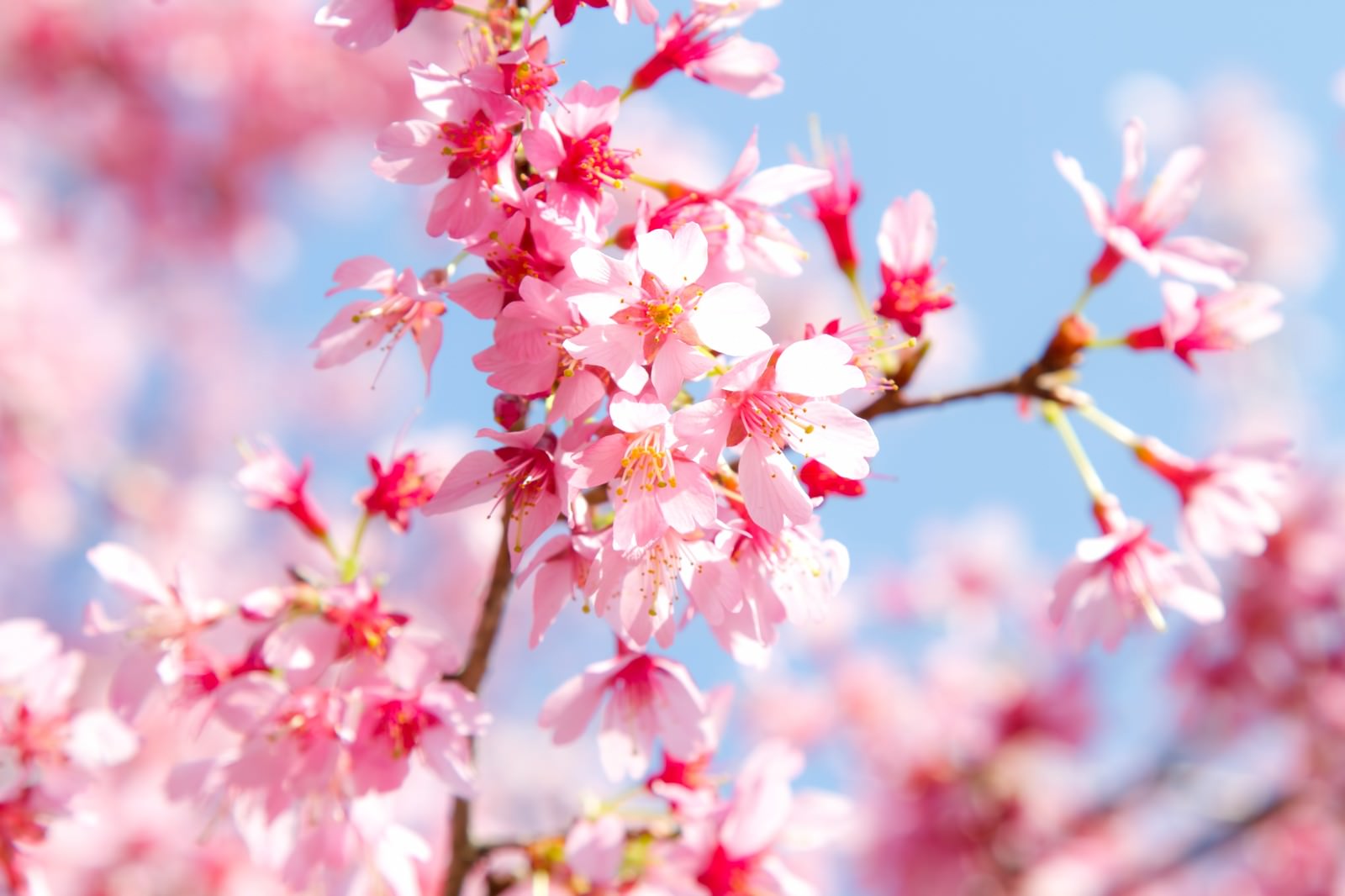
You can see cherry blossom and children with new randoseru.
It is Japansese beautiful spring scene.

YUKI_pikapikano15120242_TP_V (1)

Randoseru is popular to overseas as a fashionable bag.
However , we think it is  only  for children, so adults hardly have randoresu.

More than 20years ago, randoseru became in fashion.

Friday, April 8, 2016

Red and Wite

日本的不倒翁

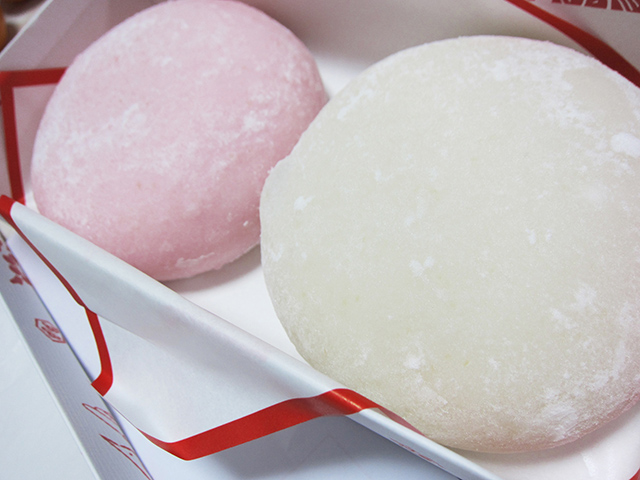
You often see the combination of red and white at celebrations in Japan.


It calls “Kohaku”.


Kohaku has deeply meaningful for Japanese people.


For example,   the stage has a red and white striped curtain at a wedding ceremony, an entrance ceremony, a company ceremony.


12299


They often hand out red and white buns with a bean-jam filling or rice cakes at these ceremony.


There are many theories about the prevalance of the combination.

The most popular one dates back to 12th century,

when the two leading clans, the Tairas, or Heike and the Minamotos, or Genji,fought a series of battles.

The conflict ended with the fall of the House of Taira and the establishment of the Kamakura government by the Minamotos.

The Taira clan flew red flags on the battlefield, while the Minamoto side used white ones, so red and white came to represent the opposing forces.